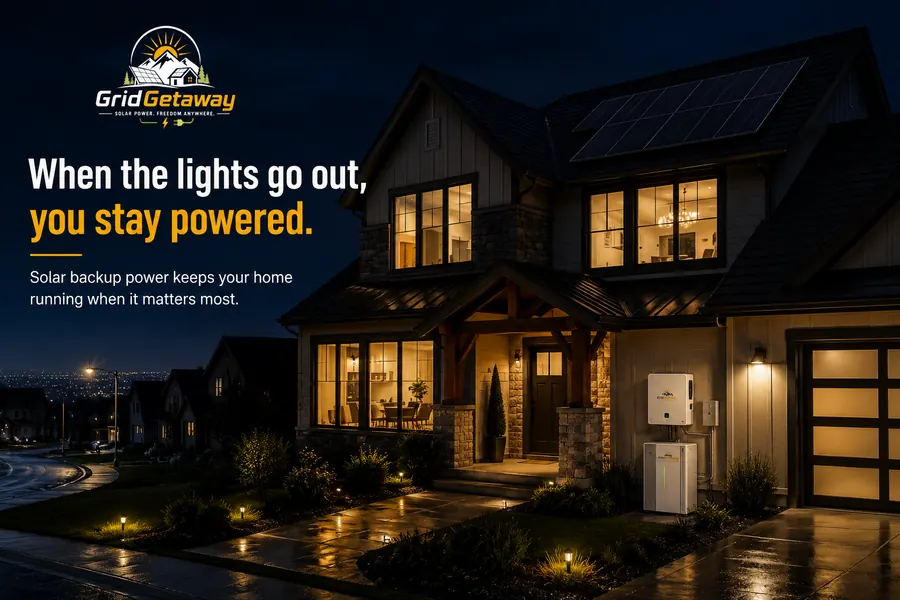
Grid outages used to be rare, short events. Today, storms, heat waves, wildfires and an aging grid make multi-hour and multi-day outages a regular part of life in many regions. A solar backup system keeps the essentials running without the noise, fumes and fuel runs of a gas generator.
What a solar backup system actually does
A solar backup system stores energy in a battery and delivers it as household AC power through an inverter. Solar panels recharge the battery during the day, so the system keeps working through extended outages. Portable power stations package all of this in one box; larger systems use separate inverters, rack batteries and rooftop or ground-mounted panels.
The loads most families protect first
Most households do not need to back up everything. Start with the loads that matter for safety and comfort:
- Refrigerator and freezer (roughly 100–200W running, 1–2 kWh per day)
- Medical devices such as CPAP machines or oxygen concentrators
- Internet router, Starlink and phone charging
- Lighting, a few fans or a small space heater
- Well pump or sump pump if you rely on one
Why solar instead of gas
Gas generators are inexpensive up front but need fuel, maintenance and outdoor placement, and they cannot run indoors. A battery-based system runs silently inside the home, starts instantly, and recharges from the sun. Over several years the fuel and maintenance savings close most of the price gap, and the system is useful every day for peak-rate shaving, camping and work sites.
How to size it
Add up the watt hours of the loads you want to run per day, then choose a battery capacity about 25% larger to keep a reserve. Make sure the inverter can handle the largest surge load, such as a refrigerator compressor starting. Our Power Planner walks through this in a couple of minutes, and our team is happy to check your numbers before you order.