When you connect more than one solar panel, you have to decide how they are wired. Series and parallel produce the same total wattage on paper, but they behave very differently in the real world.
Series wiring: voltage adds up
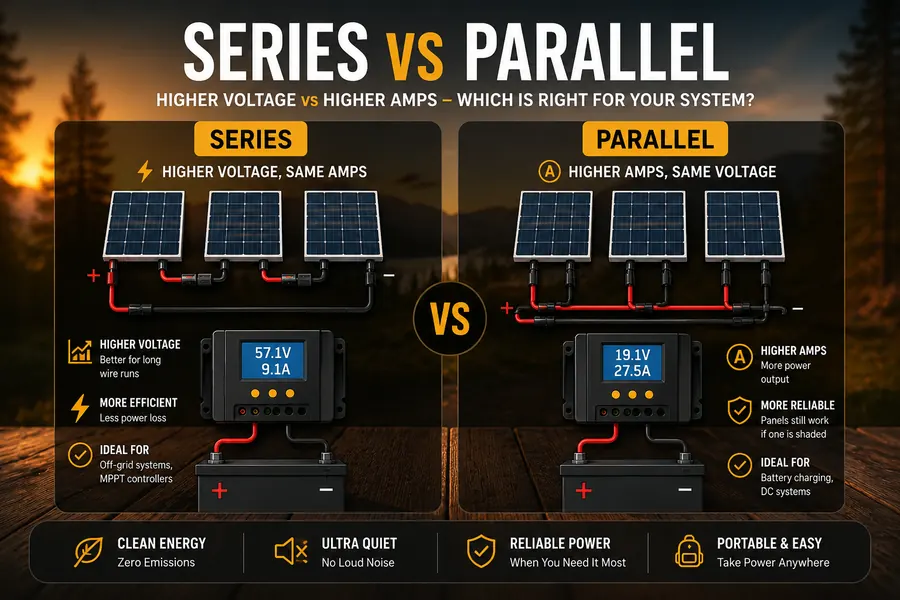
In series, the positive lead of one panel connects to the negative lead of the next. Voltages add while current stays the same. Three 24V (roughly 40Voc) panels in series produce about 120Voc. Higher voltage means thinner cables and less loss on long runs, and MPPT controllers convert the extra voltage into charging current.
Parallel wiring: current adds up
In parallel, all positives join together and all negatives join together, usually with Y-branch connectors or a combiner box. Voltage stays the same while current adds. Parallel strings tolerate partial shade better because one shaded panel does not drag down the others, but thicker cables and fuses are required.
Which one should you use?
A few rules of thumb:
- Long cable runs or a high-voltage MPPT input: lean toward series
- Partial shade from trees, vents or a roof rack: lean toward parallel
- Power stations with a low input voltage limit: parallel or a short series string that stays under the limit
- Large arrays: combine both, with several identical series strings wired in parallel
Always check the controller limits
Cold temperatures raise panel voltage by 10–25%. Keep the total string voltage comfortably below your controller or power station maximum, and keep total current within the input rating. If you send us your panel model and controller, we will check the math for you.